Speak the language of BESS fluently
Cell chemistry, PCS, BMS, EMS, fire safety, bankability — understand every acronym in any project meeting.
206 lessons. 14h 38m of video. Built by a Director of Product Engineering, not a textbook author. From cell chemistry to grid revenue — everything you need to understand how utility-scale BESS gets built, financed, and deployed.
For engineers, project managers, developers, financiers and decision-makers working in or moving into utility-scale battery storage. Assumes no electrical engineering background: it starts from Ohm's Law. Who it's for
One-time purchase on Udemy — from $20–25 USD (Udemy shows your local currency), with lifetime access. No Udemy subscription needed. Why is this course on Udemy? Why is it this affordable?
Student or early-career engineer? The Complete Guide is free for you, and every specialist course and the bundle are 50% off. The student discount does not combine with any other discount, early bird included. How to claim it
On Udemy: Bestseller · 4.6 / 5 from 500+ ratings · 2,500+ students
Prefer a dedicated page? Watch the preview with full transcript →
Two minutes from the instructor on what the course covers, from the cells up to the grid — no signup, no email.
Battery energy storage has gone from niche to critical infrastructure in under five years. Utilities are deploying gigawatt-scale projects. Developers are racing to interconnection queues. Investors are committing billions.
The reason the work still feels harder than it should is simple: there is no shared body of structured knowledge. Vendor marketing oversimplifies. University courses are years behind. Practitioners shipping real projects rarely have time to teach.
This course closes that gap.
Practical fluency across the technical, commercial, and bankability decisions that show up in real storage projects.
Cell chemistry, PCS, BMS, EMS, fire safety, bankability — understand every acronym in any project meeting.
PCS specs, PQ curves, derating, transformer selection — know what matters and what vendors hope you will not ask about.
SPVs, PPAs, capital stacks, bankability — see what makes lenders say yes, and the deal-breakers that kill projects.
BMS, PPC, EMS, SCADA — know which layer does what and how a grid signal reaches a battery cell.
Energy, capacity, ancillary services — understand how a battery actually makes money across markets.
Fire safety, augmentation, bankability gaps — learn from real failures and project deal-breakers.
11 modules, 206 lessons, and 14h 38m of video. The page below keeps the structure tight; Udemy has the full lesson list and player.
Each deep dive expands one layer this course covers in overview.
Coming from solar, wind, power electronics, or another technical field? Get the BESS-specific foundation you can't find in datasheets and YouTube videos.
You already know power systems or energy products. This course fills the BESS-specific gaps so you can lead projects with confidence from day one.
You're evaluating BESS projects but need to understand the technology and bankability deeply enough to make billion-dollar decisions.
Understand the technology your team is shipping or buying — without going back to engineering school.
I'm Sergey Syrvachev. I've worked in energy and product since 2010, and in battery storage since 2020 in clean energy, building BESS, inverter, and EMS product lines from cell chemistry to grid integration.
This course is everything I wish I had when I started in BESS — structured, practical, and grounded in real projects, not theory.
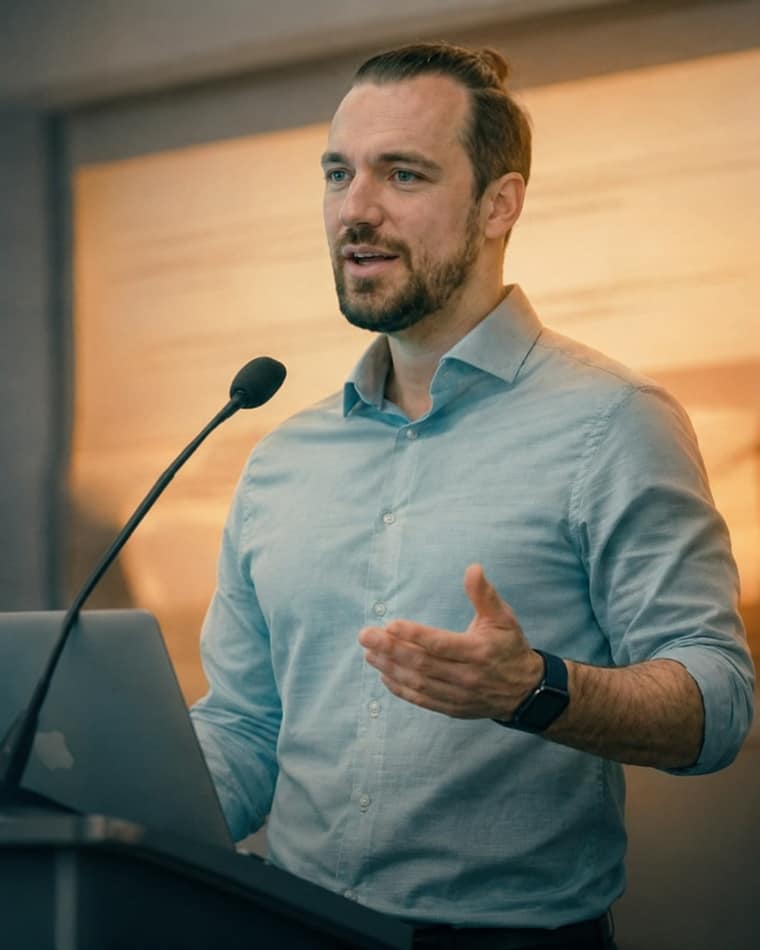 Instructor photo / Sergey Syrvachev
 Public LinkedIn feedback from engineers, project managers, consultants, and energy professionals who completed Grid-Scale Battery Energy Storage (BESS): Complete Guide. Each card links to the reviewer’s original LinkedIn post.
The main takeaway: after this course, BESS is definitely no longer a black box. You start seeing one system instead of a set of disconnected pieces.
Very solid course for anyone looking to learn more on topics ranging from cell chemistries, battery supply chain, PCS, BMS, technical specs, BESS controls, grid forming vs following inverters, various revenue streams and PPAs, what makes a project “bankable” and understanding the various risk allocations and financial structures. Working primarily in sales/biz development I really appreciated the level of technical detail that was presented in addition to the deep dive into the commercial and financial aspect of the BESS market.
I completed the Grid-Scale Battery Energy Storage (BESS): Complete Guide on Udemy and it was genuinely one of the best learning investments I have made. […] This course gave me something I was missing: a structured, end-to-end understanding of the technology and the industry around it.
BESS sits at the intersection of engineering, finance, and regulation, which is precisely where the substantive consulting work in the power sector now lies.
I took this course to close the gap between the software layer I work on and the physical reality underneath every price signal we optimize against.
Just wrapped up a deep-dive course on grid-scale BESS, taught by Sergey Syrvachev, covering the full picture from cell chemistry and system architecture to grid integration and economics.
Thank you, Sergey Syrvachev, for this valuable course. It provides a strong foundation for beginners while also serving as an excellent refresher for experienced professionals looking to revisit key topics.
Happy to have completed “Grid-Scale Battery Energy Storage (BESS): Complete Guide” by Sergey S. A valuable learning experience that helped me look at BESS from a broader system perspective. A few key takeaways: BESS architecture and AC vs. DC coupling, roles of BMS, PCS, PPC and EMS in system operation, fire safety, grid integration and project bankability. As someone working in battery modeling, it was particularly useful to connect battery-level performance with overall system design and project requirements. Thanks, Sergey S., for putting together such a comprehensive course.
I recently completed “Grid-Scale Battery Energy Storage (BESS): Complete Guide” on Udemy. Having worked in the industry, I’m always keen to deepen my technical understanding of the technologies shaping our energy future. The course covers a wide range, from battery chemistry and system design to grid integration, project development, and project finance. I especially appreciated how it connects the technical side of storage with the commercial and financial factors that determine project success. Thank you Sergey Syrvachev for making complex concepts easy to follow with clear explanations and practical examples. I strongly recommend this course to anyone who wants to understand BESS, whether you’re new to the field or looking to broaden your perspective.
Having completed quite a few courses over the years, I can confidently say this is one of the best courses I’ve attended. A big thank you to Sergey Syrvachev for an outstanding learning experience. What really sets this course apart is Sergey’s way of explaining complex technical concepts through clear explanations, clever parallels, and relatable examples. His ability to draw connections between concepts makes even challenging topics easier to visualize, understand, and — most importantly — remember. That is a rare teaching skill. It’s not just about delivering information; it’s about making knowledge stick. Highly recommended for anyone looking to deepen their understanding of grid-scale battery energy storage systems and their role in the evolving energy sector. Thank you, Sergey, for sharing your knowledge and making the learning experience so engaging!
I just completed the Grid-Scale Battery Energy Storage (BESS): Complete Guide. Thank you Sergey Syrvachev for giving a strong BESS system foundation, from a single LFP cell to containers, and from safety to bankability and project finance. The course covers the basic electrical system, grid interaction, the control architecture (BMS, PPC, EMS), and current hot topics such as grid inertia and grid-forming inverters (GFM). It connected the technical dots with the money-making ones, and it changed how I look at every BESS project. Indeed, this is the best course for anyone who wants to broaden their knowledge on the technical side as well as on bankability and financial modelling. A big thanks for putting together the techno-economics of BESS systems.
Continuous learning is part of being an engineer. I’ve recently completed the Udemy course “Grid-Scale Battery Energy Storage (BESS): Complete Guide.” Working in QC & After-Sales Engineering, I believe that understanding a BESS goes beyond knowing individual components. It’s also about understanding how the entire system works together, from battery modules and racks to PCS, system integration, commissioning, and operation. There’s always something new to learn in the energy storage industry, and I believe improving our knowledge is one way to become better at what we do. For those working in BESS, renewable energy, electrical engineering, or anyone interested in grid-scale energy storage, this course may also be worth checking out.
Just completed the Grid-Scale Battery Energy Storage (BESS) Complete Guide by Sergey S. on Udemy. On the technical side, the course covered system architecture and how the PCS, BMS, EMS and PPC work together, as well as safety and environmental aspects, including fire protection and noise assessments. Where it added the most for me was the commercial and financial side: how degradation and augmentation assumptions feed into the financial model, how revenue can be stacked beyond arbitrage, and what lenders look for in warranties and performance guarantees, all of which play a major role in a project’s success alongside the technical fundamentals. Thank you Sergey S. for sharing such valuable insights. I’d recommend the course to anyone looking to build a well-rounded understanding of grid-scale storage. Plenty more to learn in this space!
Merit Order in 3 minutes - and that’s not a complaint! I’ve been interested in energy storage since I moved into energy quant trading. I believe physical assets offer a unique edge, with almost limitless potential across ever-changing markets (and regulations). To better understand the “physics” of BESS, I took a course a friend recommended. 14.5 hours later, I think I will recommend it to a friend myself. The course covered, it seemed, everything: from the depths of chemistry and physics (my academic background helped me there) all the way up to bankability and revenue streams. And yes - merit order got just 3 minutes, which shows how much ground 14.5 hours covered. Granted, I work in energy, so for me this was more about filling gaps than learning a genuinely new field - but I absolutely got my time’s worth. It also left me with an idea: adding battery dispatch optimization to my personal forecasting project. A forecast on its own is just a number; feeding it into a dispatch decision is what turns it into something practically valuable. Big thanks to Sergey Syrvachev and Udemy for the course!
I recently completed Grid-Scale Battery Energy Storage (BESS). Working on BESS projects globally makes it essential to keep strengthening my understanding of both technical performance and project bankability. This course brought those two areas together. Thank you, Sergey Syrvachev, for a practical and informative course.
Energy storage is one of those fields where the learning curve is steep and almost nobody hands you a map. Sergey Syrvachev’s Grid-Scale BESS course is the exception. 200 lectures covering cell chemistry, system architecture, controls, project finance, grid integration and energy markets. Built by someone who has actually done this work at scale. […] I am at the beginning of my journey here and intentionally going deep on the fundamentals before anything else. This course is exactly that kind of foundation. Highly recommend to anyone serious about becoming a BESS aficionado!
Just completed a course on Battery Energy Storage Systems (BESS) by Sergey Syrvachev. With ongoing involvement in multiple BESS projects across Pakistan and Western Europe, the knowledge gained will further strengthen my understanding of BESS technologies, market dynamics, and real-world applications.
Just wrapped Sergey Syrvachev’s highest-rated course on grid-scale Battery Energy Storage (BESS) — 14.5 hours covering everything from cell chemistry to grid economics. […] Bankability is the real product. The banks financing these projects aren’t underwriting the battery — they’re underwriting the risk structure behind it: tier-1 OEM status, independent DNV due diligence, and LTSA-backed performance warranties are what actually gets a project financed. […] It’s clear the fundamentals matter as much as ever — but the technology curve keeps moving fast.
Alongside the practical experience gained through projects over the years, I recently completed several BESS courses that go beyond battery chemistry and manufacturing, focusing more on aspects relevant to utility-scale project design, deployment and operation. These included BESS architectures and design choices, AC- vs DC-coupled systems, grid-forming vs grid-following systems, performance and degradation, augmentation, warranties and LTSA, project development and construction, financing and bankability, optimisation and revenue stacking, as well as safety, permitting and compliance, among other topics. I found this particularly useful because understanding BESS from a project perspective requires looking beyond the battery itself and considering how the technical, commercial and regulatory aspects come together throughout the asset’s lifecycle.
I finished the course "Grid-Scale Battery Energy Storage (BESS): Complete Guide" taught by Sergey Syrvachev. Thanks for the knowledge sharing; it gives a great opportunity to gain firsthand knowledge of how the industry is shaping the future today.
From system sizing and techno-economic modelling to grid integration, compliance, dispatch strategy, and project economics, BESS sits right at the intersection of engineering and commercial decision-making. […] [The course] helped me connect the technical concepts with how BESS projects actually work in the real world.
English translation (ours, owner-approved)
I completed the Grid-Scale Battery Energy Storage (BESS): Complete Guide course. The course presented utility-scale BESS projects at the system level: from system architecture and control strategies, through safety approaches, all the way to project economics and financing.
The course provided practical, real-world insights into utility-scale BESS architecture, controls, and bankability.
This course gives a thorough and practical understanding of grid-scale battery systems, covering technical fundamentals, real-world challenges, and the future of energy storage solutions. One of the most valuable learning experiences I’ve had in the energy domain.
Great course by Sergey Syrvachev 👍 Job well done Sir 🙏 For me time well spent, gratitude 🙏
Our summary of the review The course supplied practical frameworks across BESS architecture, safety, grid interconnection, operational strategy, and utility-scale project economics.
The learning experience provided valuable insights into both the technical and practical aspects of large-scale energy storage, helping me build a stronger foundation in this rapidly evolving field.
Thank you Sergey S. for building a well-structured course that helps the battery engineers to quickly review and understand the real complexity of utility scale battery projects.
Pleased to share that I’ve completed the Grid-Scale Battery Energy Storage (BESS): Complete Guide course. […] The course also reinforced the growing importance of long-duration energy storage, particularly Vanadium Flow Batteries, which offer strong potential for applications requiring extended discharge duration, high cycling capability, and durable stationary operation.
This program provided valuable insights into the technical, commercial, and operational aspects of utility-scale energy storage, including grid integration, system design, performance optimization, and the critical role BESS plays in enabling renewable energy adoption and grid reliability.
The biggest shift for me: understanding BESS isn’t just a technical skill. It’s a shared language between engineers, developers, lenders, and utilities — and that cross-functional fluency is exactly what the energy sector needs right now.
The course covered topics ranging from battery performance evaluation, degradation mechanisms, and augmentation strategies to lifecycle management. It also provided valuable insights into project bankability, technical feasibility, and the factors that influence project financing, as well as safety, regulatory compliance, and risk mitigation practices that are essential for delivering reliable and sustainable BESS projects.
It tied together sizing principles, system architecture, and deployment considerations that connect directly to the pack-level engineering and cell characterization work I do day to day. Solid course for anyone getting into BESS engineering, or looking to bridge the gap between cell-level battery knowledge and system-level BESS design thinking.
This comprehensive course bridged the gap between textbook theory and real-world engineering, financial, and developmental execution.
The course provided practical insights into battery technologies, BMS, PCS, EMS, grid integration, certifications and the role of BESS in modern power systems.
The sessions provided valuable knowledge on grid-scale BESS fundamentals, system architecture, project development, battery technologies, financial aspects, and real-world industry perspectives.
My curiosity led me to Sergey S.’s course on Udemy, an incredibly thorough overview of BESS, covering everything from individual cell chemistry all the way to project finance and bankability.
The course provides a comprehensive and in-depth analysis of every major aspect of grid-scale battery systems, covering both the technical fundamentals and real-world operational challenges of modern energy storage solutions.
A great course by Sergey on Udemy on BESS, PCS, BMS, EMS, etc.
Learned key concepts around BESS Control Architecture understanding the full data & control flow across BMS, PCS, PPC, and EMS along with battery degradation, fire safety, and project bankability to support grid-scale renewable integration.
What stood out most is how cross-functional this technology actually is. A strong BESS project needs engineering, grid compliance, and project finance all working together, and being able to speak all three languages is what actually gets a project built.
33% into a course on Grid-Scale BESS, by Udemy and it's already humbling. As an electrical engineer, I walked in thinking I had a decent handle on Battery Energy Storage Systems. Turns out, what I actually knew was maybe 5% of what this course covers. Grid-scale BESS is a whole different world of complexity — sizing, integration, protection, controls, economics — and I'm only scratching the surface. Shoutout to the instructor, Sergey Syrvachev. He's not a native English speaker, and honestly, that's turned out to be a plus — it makes me listen more carefully to every word, and I end up retaining more because of it 😂 If you're an engineer or anyone curious about BESS and grid-scale energy storage, I'd genuinely recommend checking this course out. Will share more as I progress through the rest of it.
Every quote is the reviewer’s own words, from the public post each card links to. Where we cut, the gap shows as […]. Longer quotes are trimmed to fit the card; Show more opens the rest. We never infer a rating from a post, and we have not checked whether any of these reviewers had discounted access.
Review the modules, prerequisites, format, and pricing before deciding whether the course fits your work.
Average rating 4.6 / 5 from 500+ verified Udemy ratings.
This is genuinely an outstanding course. The depth and quality of the content are far above what you usually find on this platform. Sergey has done an impressive job putting together a course that is practical, technically solid, and clearly built from real industry experience rather than theory alone.…
Excellent course for anyone looking to enter or deepen their understanding of the BESS industry. Coming from a solar background, this course gave me a very solid foundation in battery energy storage systems and helped me understand both the technical and commercial aspects of the industry.…
Sergey has created an excellent, in-depth course that explains the science of BESS technologies and the benefits and practical challenges of real-world BESS applications. His depth of experience with battery storage technologies is clearly evident, and I enjoyed his teaching style. He knows what he's talking about - pay attention and reap the benefits! Well done, Sergey!
The full course is 14h 38m of video across 206 lessons. Most students complete it in 2-4 weeks, working through 1-2 hours per evening. You have lifetime access, so you can move at your own pace.
No. The course starts with electrical foundations, from Ohm's Law to AC/DC, power vs energy, and grid basics. If you are an engineer or technical professional from any field, you will have what you need.
This course focuses on utility-scale, grid-connected battery energy storage — typically 1 MWh and above. Many concepts apply more broadly, but the depth is tuned for grid-scale projects, finance structures, and engineering decisions.
Yes. Recent updates include 2026 NFPA 855 changes, large-scale fire testing requirements, and grid-forming inverter content.
Yes. When you finish all lessons, the certificate of completion comes from Udemy under its own name. Many students add it to LinkedIn to signal BESS knowledge to employers and clients. It is a completion record, not an accredited professional certification: as of 2026 there is no accredited BESS-engineer certification to hold. What the credentials actually are
The course runs on Udemy: it appears in your Udemy library immediately after purchase, with Udemy’s apps and offline viewing, and you keep lifetime access.
Email sergey@bess.courses. We usually reply within 2 working days.
Udemy offers a 30-day money-back guarantee. Try the course, and if it is not a fit, you can request a refund through Udemy.
206 lessons. 14h 38m of video. Lifetime access. Built from real projects.
From $20–25 USD — a one-time purchase, not the Udemy subscription. Why is this course on Udemy?