BESS Decoded
Short visual explanations that make battery energy storage easier to understand. Every episode, each with its chapters and the glossary terms it explains.
-
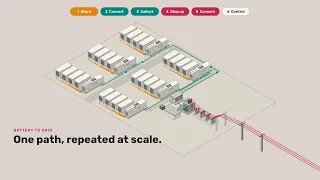
How a BESS Site Works: Batteries to Grid
Take a visual tour of a battery energy storage system (BESS) and see how its main parts connect—from battery containers to the grid.
-
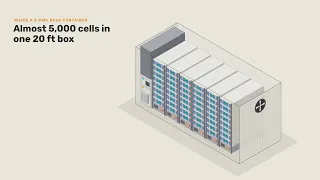
Inside a 5 MWh BESS Container: How It Works
Step inside a 5 MWh BESS container and see how thousands of cells become one complete battery energy storage system.
-
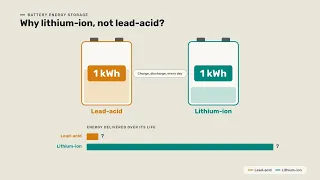
Why BESS Uses Lithium-Ion Instead of Lead-Acid
Why do modern battery energy storage systems use lithium-ion instead of lead-acid?
-
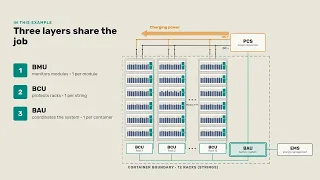
Battery Management System Explained: 3 BMS Layers
How does a battery management system (BMS) help protect thousands of lithium battery cells?
-
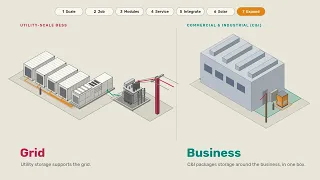
C&I vs Utility-Scale BESS: What’s Different?
See how commercial and industrial (C&I) battery storage differs from utility-scale BESS—in purpose, size, electrical connection and the equipment inside.
-
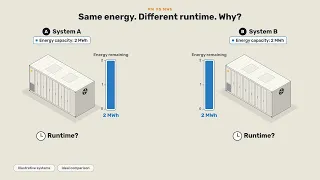
MW vs MWh Explained: How Long Can a Battery Run?
MW vs MWh: why can two batteries with the same energy capacity run for different lengths of time?
-
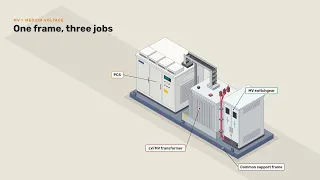
What Is an MV Skid? From Battery Power to the Grid
What is an MV skid, and what does it do beside a battery container?
-
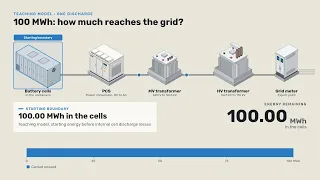
Why a 100 MWh Battery Delivers Less to the Grid
A battery starts with 100 MWh. In this worked example, 88.97 MWh reaches the grid meter.
-
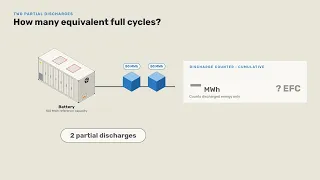
What Counts as One Battery Cycle? Equivalent Full Cycle (EFC)
Do two 50% discharges count as one battery cycle?
Follow the BESS Decoded playlist Visit the channel on YouTube